
 Vocabulary:
Global Warming (noun): The long-term increase in Earth's average surface temperature due to human activities, primarily the release of greenhouse gases.
Greenhouse Gases (noun): Gases, such as carbon dioxide and methane, that trap heat from the sun in Earth's atmosphere, leading to an increase in temperature.
Climate Change (noun): A significant and lasting change in the average weather patterns on Earth, often associated with global warming.
Extinction (noun): The complete disappearance of a species from the planet.
Ecosystem (noun): A community of living organisms and their interactions with each other and their environment.
Carbon Footprint (noun): The total amount of greenhouse gases, primarily carbon dioxide, produced by human activities.
Adaptation (noun): The process of adjusting to changes in the environment or conditions.
Questions:
- What comes to mind when you hear the term "global warming"?
- How do you think global warming affects the planet and its inhabitants?
- What can individuals and communities do to address global warming?
- Why is it important to take action against climate change?
Global Warming - The End Game
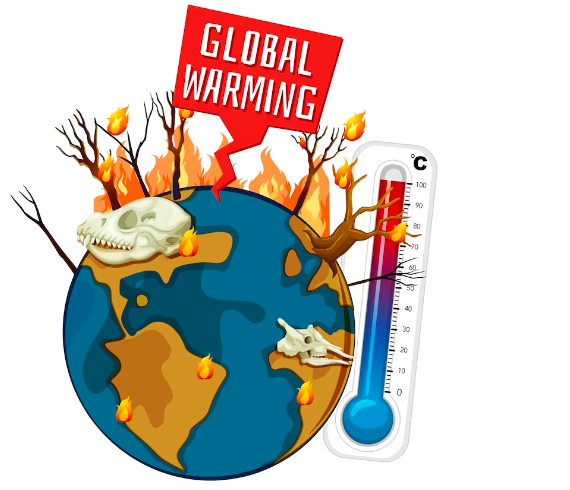
Global warming is no longer just a distant concern; it's a reality that's affecting our world today. The consequences of this phenomenon, driven by the release of greenhouse gases into the atmosphere, are far-reaching and have given rise to the term "climate change."
As our planet warms, we're witnessing shifts in weather patterns, more frequent and severe natural disasters, and rising sea levels. But beyond these visible impacts, there's a deeper, more alarming concern: the potential for mass extinction and the disruption of entire ecosystems.
Species that have thrived for thousands of years are struggling to survive in a changing world. Rising temperatures can lead to habitat loss, making it harder for many creatures to find food and shelter. Coral reefs, home to countless marine species, are bleaching and dying due to warmer ocean temperatures. Polar bears are losing their ice habitats, and many bird species are altering their migration patterns.
But it's not just wildlife that's at risk. Human societies face significant challenges as well. More extreme weather events can result in property damage and the displacement of communities. Changes in temperature and precipitation can affect food production, potentially leading to shortages. Sea-level rise threatens coastal cities and their populations.
The clock is ticking, and the consequences of inaction are severe. To combat global warming, individuals, communities, and nations must reduce their carbon footprint, transition to renewable energy sources, and prioritize adaptation to the changes that are already underway.
The end game of global warming is still uncertain, but one thing is clear: the choices we make today will shape the future of our planet. The time for action is now.
Discussion Questions:
- What specific examples of climate change have you observed or read about in your region?
- How can individuals and communities contribute to mitigating global warming and its impacts?
- What motivates you to take action against climate change, and what steps are you willing to take?
- What role do you believe governments and international organizations should play in addressing global warming?
