
 Vocabulary:
Spinning (verb): Rotating or turning around an axis.
Backwards (adverb): In the opposite direction from the usual or expected way.
Rotation (noun): The act of spinning or turning around an axis.
Axis (noun): An imaginary line around which an object rotates or spins.
Day (noun): A period of 24 hours during which Earth completes one full rotation on its axis.
Climate (noun): The long-term weather patterns and conditions in a specific region.
Equator (noun): An imaginary line that circles Earth halfway between the North and South Poles, dividing the planet into the Northern Hemisphere and the Southern Hemisphere.
Questions:
- Have you ever thought about what would happen if the Earth's rotation reversed?
- How do you think a backward-spinning Earth might affect our daily lives?
- What are some of the factors influenced by Earth's rotation?
- Why is understanding Earth's rotation important for science and climate?
What if Earth Starts Spinning Backwards?
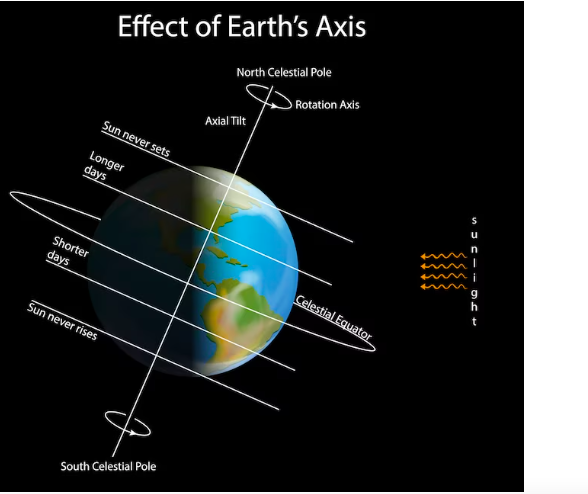
Earth's rotation is a fundamental part of our planet's existence. It's what gives us day and night, influences our climate, and plays a crucial role in many aspects of life on Earth. But what if, suddenly, Earth started spinning backwards?
First, let's understand how Earth currently rotates. Our planet spins on its axis from west to east. This rotation creates the cycle of day and night as different parts of the Earth are exposed to the sun's light. It also affects the way our atmosphere and ocean currents move.
If Earth were to start spinning in the opposite direction, many things would change. Our days and nights would be reversed. Instead of the sun rising in the east and setting in the west, it would do the opposite. This shift in rotation would have a profound impact on our climate and weather patterns.
For example, the equator, which currently experiences consistent warm temperatures, might become a colder region. Weather systems that rely on the Earth's current rotation would behave differently, potentially leading to changes in rainfall patterns and the distribution of heat around the globe.
Our daily routines would also be affected. Everything from the direction in which we see the stars move at night to the way we experience sunrise and sunset would be reversed. Navigating the seas and skies would require adjustments due to the altered rotation.
While the idea of Earth spinning backwards is a fascinating concept, it's important to remember that our planet's rotation is a fundamental part of the way life on Earth has evolved. Any significant change in this rotation would have far-reaching consequences, and scientists continue to study Earth's rotation to better understand our planet's delicate balance.
Discussion Questions:
- How do you think a reversal in Earth's rotation might affect the behavior of animals and plants?
- What challenges might arise from the reversal of day and night?
- Why is Earth's rotation considered a critical factor in our planet's habitability?
- What would you want to learn more about regarding Earth's rotation and its effects?
